Has mainstream culture disappeared? New YouTube trends research says no

New research from YouTube and NRG explores how creators, memes, and digital lore break through to wider audiences.
Sep 10, 2026 [[read-time]] minute read

Sep 10, 2026 [[read-time]] minute read
What defines mainstream culture in an era where everyone’s feed looks completely different? According to YouTube’s latest Culture & Trends Report, In Search of Mainstream, our cultural landscape is more fragmented than ever, but the mainstream hasn't disappeared—its meaning has just shifted.
To learn more about the modern mainstream, the YouTube Culture & Trends team partnered with NRG to review prevailing themes in recent research, analyze entertainment, media, and video trends from around the world, and run surveys asking thousands of people about their interests and attitudes toward culture. Respondents were active online, age 14–44. Below, we explore the core findings of the report and what they reveal about the future of shared culture.
Explore the changing cultural landscape in the full report
Not at all, but its meaning has shifted. Audiences have access to more content, communities, and creators than at any other point in history. The result is a culture that is more personalized and less synchronous.
Yet shared moments still break through. 63% of 14- to 29-year-olds agree that being into the same things as other people makes them feel part of something bigger. 1 The difference is that, increasingly, culture begins online, gaining momentum within digital communities before reaching wider audiences.
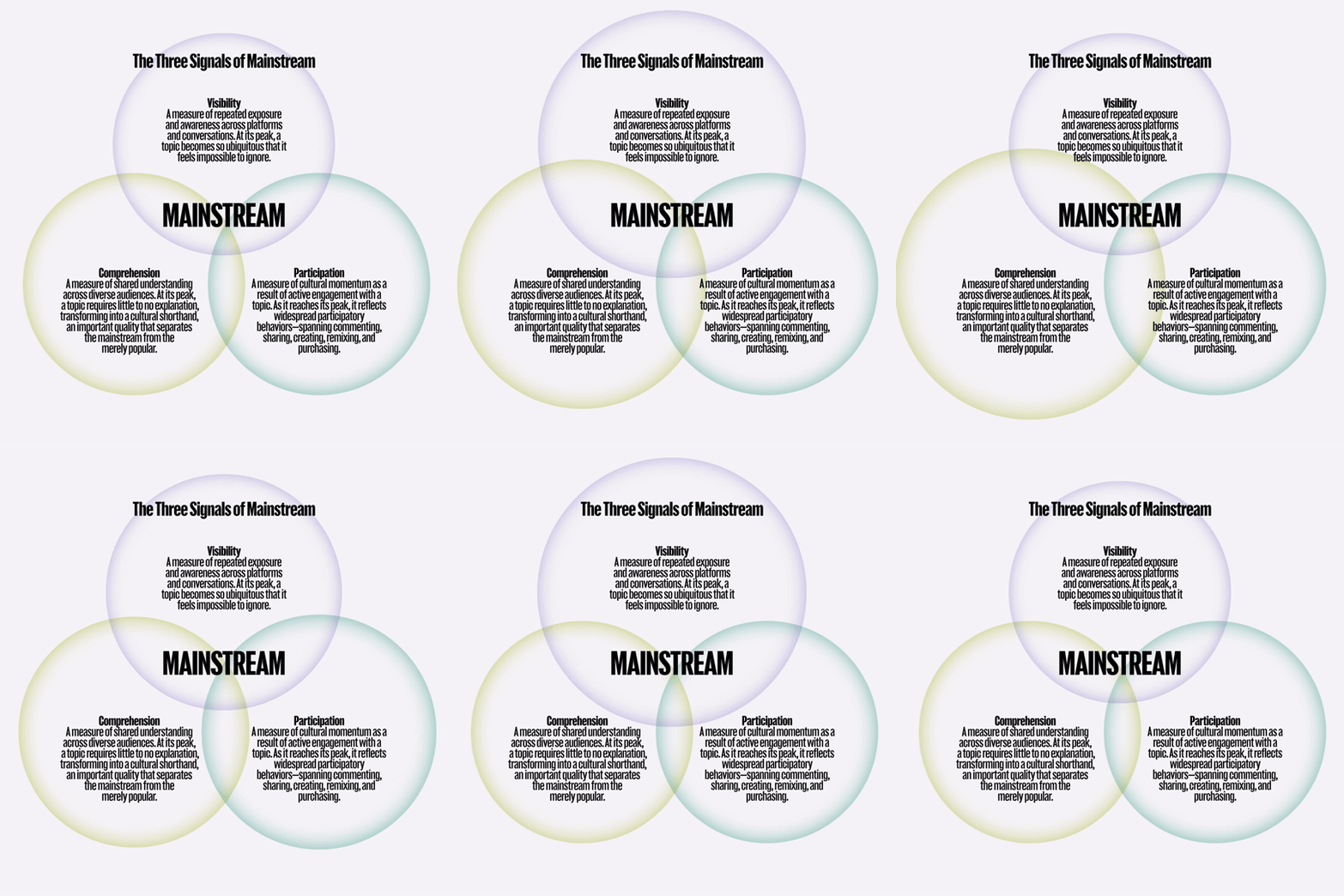
It has become increasingly difficult to understand when something has broken through as older signals have become less relevant in our increasingly digitally mediated culture. Through our research, we have identified three signals that shape the modern version of mainstream and can help us measure the cultural breakthrough of phenomena.
Visibility: A measure of repeated exposure and awareness across platforms and conversations. At its peak, a topic becomes so ubiquitous that it feels impossible to ignore.
Comprehension: A measure of shared understanding across diverse audiences. At its peak, a topic requires little to no explanation, transforming into a cultural shorthand, an important quality that separates the mainstream from the merely popular.
Participation: A measure of cultural momentum as a result of active engagement with a topic. As it reaches its peak, it reflects widespread participatory behaviors—spanning commenting, sharing, creating, remixing, and purchasing.
69%
of respondents have watched content from a community they would consider niche
When survey respondents were asked what lots of people seem to be into nowadays, digital entities like YouTube creators (77%) and memes (78%) were perceived to be as widely known as Hollywood celebrities (79%) and the Super Bowl (83%). 2
71% have watched videos unpacking stories within a specific fandom or community, while 69% have watched content from a community they would consider niche. 3 This is a signal that audiences are actively exploring and helping shape what becomes important next, and that the average person's cultural diet may now consist of more niche ideas than mainstream ones.
YouTube has created new entry points into culture. A prime example is "The Backrooms," which originated as a single creepy photo before fan communities expanded the concept through fan art, theories, stories, and forums.
Director Kane Parsons (@KanePixels) adapted the lore into a found-footage YouTube series, with the first short drawing over 90 million views. 4 That online momentum culminated in an A24 theatrical adaptation that opened to $118 million globally, setting a studio record and making Parsons the youngest director to ever top the global box office. What was once a niche concept had grown into a mainstream phenomenon, culminating in a fan-driven theatrical event.
73%
agree YouTube is the best place to deeply explore their personal interests.
For Gen X, “selling out” was the worst thing an artist could do. Millennial hipsters inherited a version of that mindset too, with discovery and niche taste becoming forms of cultural currency. Today, younger audiences see success differently.
Because audiences participate in creating, sharing, and amplifying what they love, cultural breakthroughs feel increasingly like shared achievements.
In an era of limitless content, visibility is everywhere, but comprehension is scarce. Audiences turn to YouTube not just to find what exists, but to understand why it matters:
Read the full report to explore interactive data visualizers, demographic breakdowns, and case studies spanning video games, anime, podcasts, and sports.